
WHY COACHING?
Coaching becomes useful when something important needs to change, but your current way of seeing and responding keeps producing the same result, even when you already know what you should do.
By Ellery Ng, ICF Professional Certified Coach and Newfield Certified Coach — a Singapore-based executive communication and confidence coach.
You may already know that you should speak more concisely, stop overthinking, assert yourself earlier, or remain composed when someone challenges you. Yet when the meeting, presentation or difficult conversation arrives, your familiar response returns. You freeze. You ramble. You soften your point until it disappears. Or you become more forceful than you intended.
The problem is not always a lack of knowledge. Often, it is the gap between what you understand intellectually and what is available to you under pressure.
1-to-1 coaching gives you a trained outside perspective on the patterns you cannot easily see from inside them. It also gives you a private space to experiment with different responses, then turn what you discover into practice in your real life.

That is why capable people seek coaching — not because they are broken, but because we all have blind spots, and they are difficult to see when we’re stuck inside the pattern.
When quizzed about the best advice he’s ever received, ex-CEO of Google Eric Schmidt recounts, “You need a coach. Everybody needs a coach”.
“Everyone needs a coach”, Bill Gates echoed, as he opened one of his TED Talks on the importance of feedback and coaching.
Why Do Capable Professionals Still Get Stuck?
Your communication habits are not waiting politely for you to think about them. They occur automatically (and usually during important moments).
Before you decide to stay silent, your chest may already have tightened. Before your answer becomes long and tangled, you may already be trying to protect yourself from being misunderstood. Before your tone becomes sharp, your body may already be carrying urgency or frustration.
Even useful feedback rarely explains this.
“Be more concise.”
“Just speak more confidently!”
“You need more executive presence.”
Such comments describe the effect others would like to experience from your communication, but do not reveal what produces them.
The qualities that helped you succeed can also become limiting when circumstances change. Carefulness can become overthinking. Self-reliance can become distance. High standards can become an inability to speak until every sentence feels perfect. Decisiveness can become harshness.
You cannot change a pattern that remains invisible to you. Coaching helps make it visible.
Surgeon and writer Atul Gawande describes his personal realization of why coaching can make a critical difference to performance:
“There are numerous problems in making it on your own. You don’t recognize the issues that are standing in your way or if you do, you don’t necessarily know how to fix them. And the result is that somewhere along the way, you stop improving.”
What Does Coaching Add That Advice & Self-Help Cannot?
1. A perspective outside your own
A coach listens not only to the problem you describe, but also to how you are seeing it. The assumptions you treat as facts, the choices you no longer notice, and the gap between your intention and your impact can all become available for examination.
This is why I often describe a coach as a human mirror. The mirror does not drive the vehicle for you. It lets you see what would otherwise remain in your blind spot, so you can navigate with more awareness… and avoid unnecessary accidents!

2. Work Built Around Your Actual Situation
A book or workshop has to address a general, mass audience. 1-to-1 coaching can begin with the conversation you need to have next Tuesday, the meetings in which you repeatedly shrink away, or the feedback from your manager that you still do not know how to act on.
The learning follows your context, your desired outcomes and your actual progression, instead of forcing you to follow a fixed curriculum.
3. Practice, Not Merely Understanding
Insight matters, but insight alone does not guarantee a different response. Practice is the difference between knowledge and wisdom.
In coaching, we can slow a situation down, notice what happens in your thoughts, emotions and body, and experiment. You might try a shorter assertion, a different pace, a more grounded posture, a clearer request, or a new way of listening. You can feel what changes, receive direct feedback and decide what is both effective and authentic for you.
4. Learning That’s Low-Risk Yet Practical
Your workplace becomes part of the learning process. You try something in an actual meeting or conversation, notice the result, and bring that information back. Together, we refine the practice around what really happened, instead of around an idealised scenario.
What’s also valuable to nearly all the executives I’ve coached is how they can practice and experiment without risk to their current reputation at the workplace. Not everyone has a patient, nurturing boss or supportive, generous colleagues who are standing by to help you. In fact, many corporate environments described to me sound like the opposite. If you can resonate with this, you might understand how risky — or even impossible — it can be to share your challenges and ask for help at the workplace.

But when my clients are finally ready to try something new, they aren’t doing it blind, or alone. They have me in their corner — giving them feedback, ideas, encouragement… or a listening ear.
Through such a process of coaching, new ways of showing up and responding can become more natural to you, without requiring you to recite a script or act in inauthentic ways.
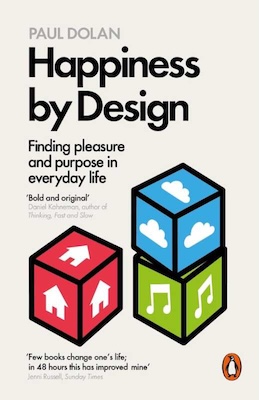
Paul Dolan, Professor of Behaviorial Science at London School of Economics and the author of the bestselling book Happiness By Design, wrote:
Just as people have for years been employing personal trainers to help them get fit and lose weight, so too achieving goals can be accelerated by using an advisor or coach to apply similiar principles to success in life.
How Much Will You Benefit From Coaching?
Coaching is likely to benefit you when:
- a professional or personal outcome genuinely matters to you;
- the same difficulty keeps repeating despite thought, effort or training;
- you are willing to examine the part you play in the result;
- you are open to feedback and experimentation; and
- you are prepared to change, through practice
- you’re not simply after ‘tips’ or ‘the answer’.
You do not need to arrive confident, articulate or certain. Even if your employer introduced the coaching, you do not have to begin as a believer. But for the work to become meaningful and beneficial, you eventually need to take ownership of the objectives — not only your boss or HR.
If what you want is a guaranteed formula, a script to memorise, or someone else to take responsibility for the outcome, coaching may frustrate you.
Why My Coaching Focuses on Communication & Confidence

Communication is an aspect of life where many invisible patterns become painfully visible.
You may be a subject-matter expert and still lose access to your thinking in front of senior stakeholders. You may know the principles of assertiveness and still be unable to say what you really need to. You may prepare thoroughly for a presentation and find that preparation does not settle your body when the impromptu questions interrupt you.
This is why my work with executives and professionals goes beyond words. Through an ontological and somatic approach, we examine how your language, emotions and body shape the way you communicate — and how you can develop a wider, more useful range of responses.

Abigail | Team Lead
“What I did not expect was how much of the work would happen in my body, not just my head.”
What Do You Want Next?
If you are considering coaching, continue with:
- How Can a Coach Help Me? — six ways coaching can support your communication, confidence and professional relationships.
- How Does Communication Coaching Work? — what happens before, during and between coaching sessions with me.
"A good coach can change the game. A great coach can change a life."
~ John R. Wooden